

When the Aligner Keeps Ending Up on the Nightstand

You spot it on the bathroom counter during the morning rush, or your kid mentions at dinner that the tray came out at lunch and never went back in. No argument, no emergency, just a quiet worry that those aligners are not putting in their hours. It is one of the most common things parents bring up at orthodontic visits, and it is almost always fixable.
Consistency with Invisalign is a habit problem, not a willpower problem. The good news is that the right routine makes wearing the trays the easy, obvious next step rather than a daily battle. This guide covers the practical strategies Dr. Ullrich and the team at NOVA Pediatric Dentistry & Orthodontics share with Ashburn families to keep treatment on track from the first tray to the last.
Want to talk through your child's specific plan? Reach out to our Ashburn office or call (703) 729-7005.
What to Know First
- Aligners need to be worn roughly 20 to 22 hours a day to keep teeth moving on schedule.
- Routines work better than reminders. Tying the trays to something your child already does each day removes the daily decision entirely.
- Lunch is the biggest trouble spot, so it's worth building one clear rule around it.
- A quick weekly note in your phone gives Dr. Ullrich accurate information at each visit and helps keep the plan on track.
Why Wear Time Matters More Than Anything Else
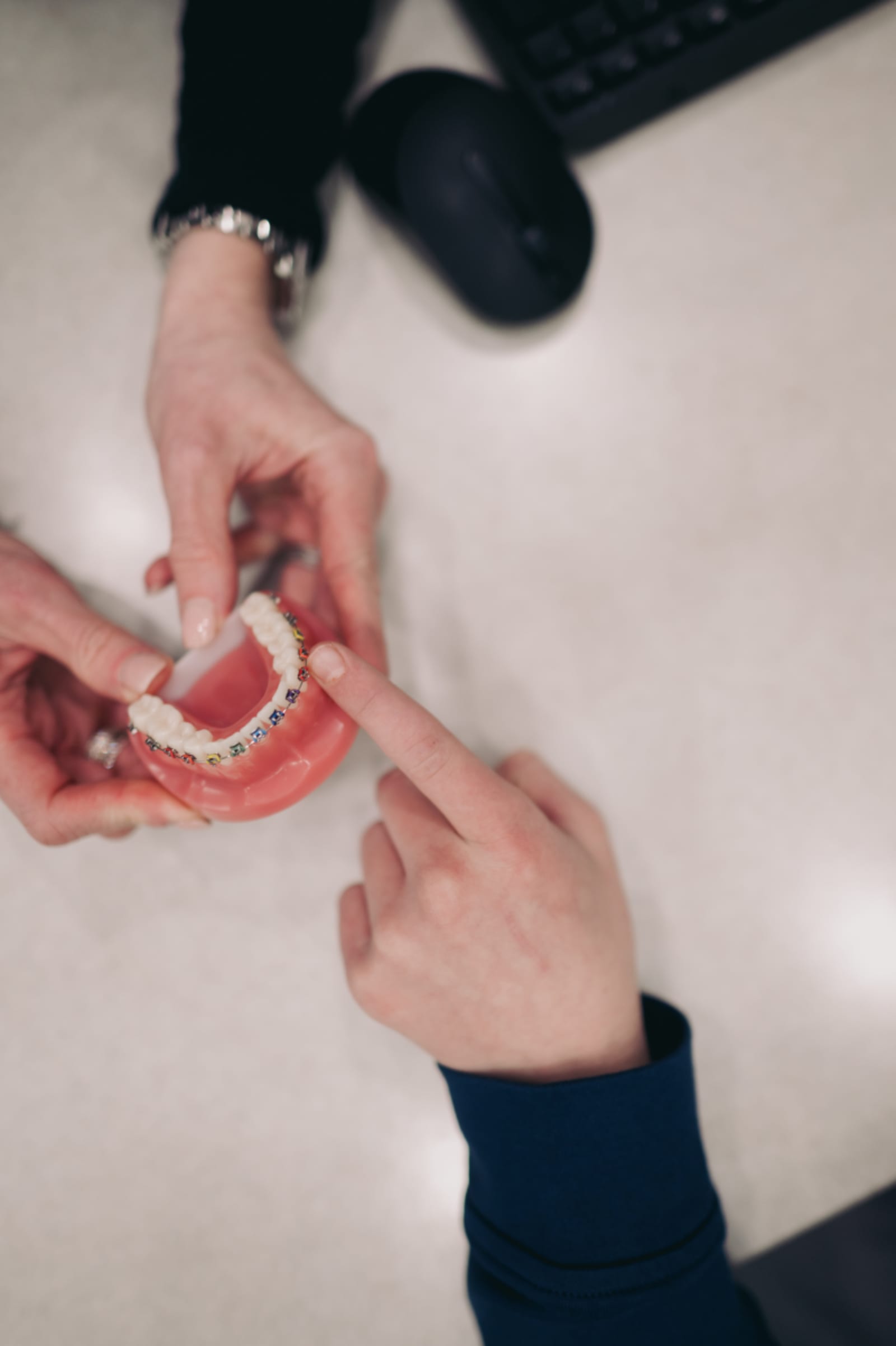
The 20 to 22 hour guideline reflects how teeth actually move. Aligners apply gentle, steady pressure, and the bone around each tooth slowly reshapes in response. When trays come out for long stretches, that pressure becomes inconsistent and teeth begin drifting back, so the next aligner arrives expecting movement that never fully happened. When wear time slips week after week, a few predictable things follow:
- Treatment runs longer than the original estimate, sometimes by months.
- Aligners stop fitting snugly, especially around the back teeth, because the teeth have not moved to where that tray was designed to sit.
- Refinements become more likely, meaning a new scan and an extra set of trays to get things back on track.
Refinements are not a failure. Plenty of treatment plans include them, and Dr. Ullrich is upfront about that from the very first Invisalign visit. Wear time is the one variable your family has the most control over, and a simple way to frame it for kids is this: two hours out per day adds up to roughly two full days of missed movement every month. Most tweens do that math once and remember it.
Building a Routine That Does the Reminding for You
Reminders and nagging wear out fast. The better move is attaching aligner wear to something your child already does every day without thinking.
Pick One Anchor Per Part of the Day
- Morning: trays go in right after breakfast dishes hit the sink.
- After school: trays go in before the backpack gets unzipped.
- Bedtime: trays go in after the toothbrush goes back in the holder.
Three anchors cover almost the whole day without requiring anyone to remember a thing.
Make the Trays Impossible to Lose Track Of
A chart on the bathroom mirror, a labeled phone alarm, or simply leaving the case somewhere your child walks past every day all work. Pick one and give it three weeks. If it is not sticking, bring it up at the next visit and Dr. Ullrich will help you find something that fits your family's schedule.
Handling the Moments Kids Push Back

Every routine hits a rough patch. A birthday party, a sleepover, a tournament weekend where three days blur together and the case never comes out of the bag. None of that means you're failing or that your child is a bad patient. The goal is to make it easy to do the right thing before a tricky moment arrives, not to troubleshoot after it.
Keep a small, labeled case in the backpack and another in the sports bag. Having somewhere clean to put the trays removes the most common excuse and prevents aligners from getting wrapped in a napkin and thrown out at lunch. The school cafeteria is where wear time slips most often, so one rule helps: before throwing away your trash, aligners go back in.
Some kids feel awkward taking trays out in front of friends, and telling them nobody notices doesn't make that feeling go away. Listen first, then bring the conversation back to what they're working toward. Kids who feel like treatment is something they chose tend to follow through better than kids who feel like it's just happening to them.
Keeping Track of Aligner Changes and Rubber Bands
Good habits keep the trays in. Good tracking keeps your child's care team informed, and that information shapes every decision we make at each visit.
At appointments, we ask which aligner number your child is on and often hear "fourteen? Maybe fifteen?" That is not a parenting failure. It is just what happens during a busy school year. A short note in your phone, updated once a week, fixes it completely.
What to Log
- Aligner number and the date you switched to it
- Whether rubber bands were worn consistently that week, and any days they were skipped
- Anything unusual, like a tray that does not fit snugly, a sore spot, or a cracked edge
If an Aligner Gets Lost or Damaged
- Put the previous aligner back in right away to hold the teeth in their current position
- Call our Ashburn office at (703) 729-7005 so we can advise on whether to reorder or move forward
- Do not move to the next tray on your own
- Teeth that have not finished moving will not fit the following aligner properly
Rubber Bands Deserve Their Own Attention
When rubber bands are part of your child's plan, they correct the bite in ways the trays cannot do alone. They also tend to be the first thing that slips, because they are small and easy to skip just one day. Keeping a spare bag inside the aligner case means swapping one out after lunch takes seconds. Log the missed days honestly.
Keeping Motivation Alive Over a Long Treatment
Month one is easy. Month seven is where families need a strategy, and what works depends a lot on how old your child is.
Make Progress Countable for Younger Kids
"Eighteen more weeks" means almost nothing to a seven-year-old. It lands somewhere between tomorrow and never. What does register is something they can see shrinking: a stack of remaining trays they get to count, or a chart where appointments get crossed off. Small, concrete markers give a young child something to hold onto on the days motivation dips.
Hand Over the Ownership to Tweens and Teens
Older kids respond to being trusted with their own treatment. Let them track the switch dates, ask Dr. Ullrich the questions at each appointment, and notice the changes in their own smile. When the outcome feels like theirs rather than a project their parents signed them up for, the trays stay in without any reminders needed.
Photos Do What a Mirror Cannot
Day-to-day change is too gradual to notice in the mirror. A side-by-side photo from month one to month four is a different story. Take a quick photo each time your child starts a new tray, same lighting, same angle. Around the third or fourth comparison, most kids get genuinely excited, and that excitement carries further than any reminder you could set.
Looping In School and Knowing When to Call Us
The call we get most often from a school nurse starts the same way: a student is in the health office, the tray came out at lunch, and nobody can find it. A quick heads-up to the school at the start of treatment prevents almost all of those calls.
- Let the school nurse know your child wears aligners so a lost tray or sore spot gets handled with a quick call to us instead of an afternoon of guessing.
- Give the teacher a short note if your child needs an extra minute at the water fountain or feels uncomfortable after switching to a new tray.
- Send a spare case and a small bag of elastics to keep in a desk or locker.
Between visits, some things are worth a call rather than a wait. A tray that does not fit snugly after two or three days, a lost or cracked aligner, wear time that has slipped, or elastics your child cannot manage on their own are all worth reaching out about. None of those are emergencies, but all of them are easier to fix early.
We'd Rather Hear the Question Than Have You Wonder
What happens between appointments is what shapes the final result. So bring us the messy stuff.
If wear time has slipped, tell us. If something looks off, just ask. After twenty years of watching Ashburn kids grow up here, we've heard every version of "I forgot again." Nobody gets a lecture.
We're at 21785 Filigree Court, Suite 208 in Ashburn. Call (703) 729-7005 or contact our team online to schedule a visit with Dr. Woo or Dr. Ullrich.