
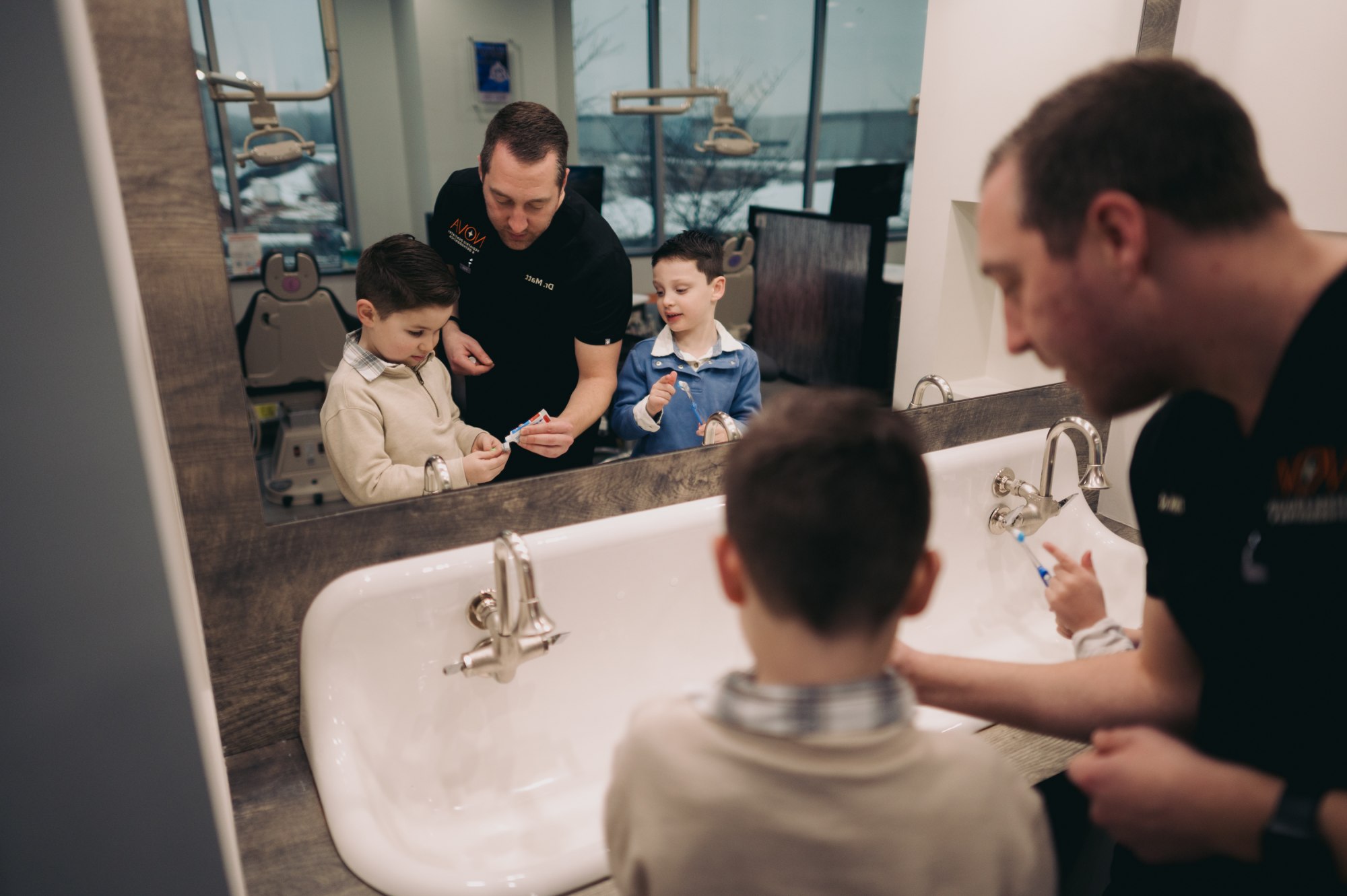
Helping Your Anxious Child at the Dentist: What Actually Works
If dental visits end in tears, stalling, or a flat refusal to get in the car, you're not alone. Dental anxiety in kids is incredibly common, and it shows up differently at every age. The good news is that it's almost always manageable, and usually with a lot less struggle than you're expecting. The key is matching the right level of support to your child's level of fear, rather than hoping they'll push through on their own.
Dr. Woo, Dr. Ullrich, and the team at NOVA Pediatric Dentistry & Orthodontics have spent nearly twenty years helping kids across the full range of anxiety, from first-visit jitters to children with sensory or developmental needs who need a completely different approach. This guide walks through every option, from simple preparation strategies at home all the way through sedation, so you can find what fits your child.
If you'd like to talk through your child's situation before booking anything, we're happy to listen. Call us at (703) 729-7005 or request a visit online.
What This Guide Covers
- Why Kids Fear the Dentist and How to Spot Real Anxiety: the root causes of dental fear and what to watch for at each age, from toddlers to teens.
- How to Prepare Before the Appointment: what to say, what to avoid, and what to share with our team so we can plan the visit around your child.
- Comfort Techniques We Use During the Visit: the in-office strategies our team uses to keep kids calm before any medication is considered.
- Sensory-Aware Care for Children With Special Healthcare Needs: how we adapt every visit for kids with autism, Down syndrome, ADHD, and sensory sensitivities.
- Sedation Options, Costs, and Long-Term Prevention: every level of support we offer, what to expect from each, and how to build a positive relationship with dental care that lasts.
Understanding Why Children Fear the Dentist
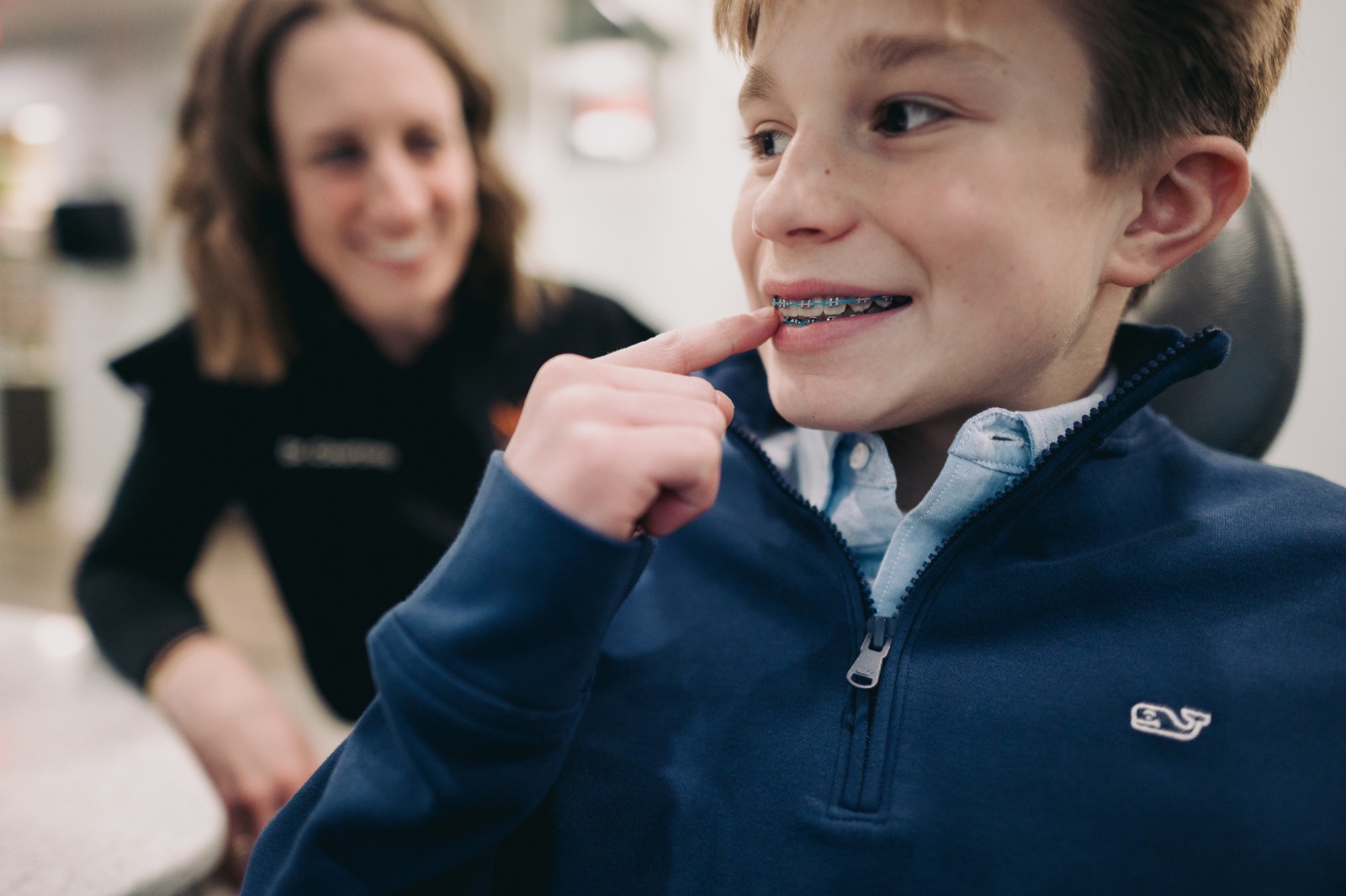
Sensory Overload
The drill, the suction, the bright light, the smell. It's a lot for a young child to process all at once, and our team adjusts the pace based on what each child can handle that day.
Fear of Pain
This fear often has nothing to do with something that actually happened. A cousin's story, a cartoon, or something overheard in passing is enough to plant a worst-case scenario in a child's mind.
Loss of Control
Lying back in a chair, mouth wide open, unable to see or talk, is genuinely uncomfortable for a child who is sensitive to feeling held still or managed.
Borrowed Anxiety
Kids absorb the feelings of the people around them. A parent's dread, a sibling's dramatic retelling, a friend's scary story at school can all shape how a child feels before they ever sit in the chair.
A Previous Experience That Went Badly
Being told something wouldn't hurt when it did, or feeling like no one stopped when they signaled discomfort, can shape every visit that follows. The good news is that trust can be rebuilt, especially when a child feels like they have real control over the pace.
How to Prepare Your Child Before the Appointment
Choose Your Words Carefully
Kids think in pictures, so keep it simple and positive. "The dentist is going to count your teeth and clean them so they stay strong" is plenty. Avoid words like hurt, shot, needle, and drill. Our team has their own kid-friendly language for everything and will introduce it when the time is right.
Do Not Over-Promise Either
"It won't hurt at all, I promise" can backfire the moment anything feels even slightly off. Try something more honest: "Some parts might feel a little funny, and you can raise your hand any time." That kind of reassurance actually holds up.
Play Dentist at Home
This works especially well for kids under six. Count their teeth with a spoon while they lie back on the couch, then let them do the same to you or a stuffed animal. A picture book about the dentist can help too.
Pick the Right Time Slot
Morning appointments tend to work best for younger kids, before tiredness and transitions wear them down. We open at 7:30 am on Mondays, Wednesdays, and Fridays if an early start works for your family.
What to Tell the Dental Team Before You Arrive
Here's the kind of thing that really helps us:
- Any past dental visits that didn't go well, even if it was years ago or at a different office.
- Specific things that set them off: the sound of the suction, being leaned back too fast, unexpected touch, or having a stranger's face close to theirs.
- Sensory sensitivities to light, noise, smell, taste, or texture.
- Any diagnoses, medications, or tools and strategies your child uses to communicate or cope.
- What's worked before, even small things like counting out loud together or putting on a favorite show.
- What hasn't worked, so we don't accidentally repeat it.
- How your child shows they're struggling, especially if they tend to go quiet or shut down instead of speaking up.
Comfort Techniques the Team Uses During the Visit

Tell-Show-Do
Nothing goes in your child's mouth without a heads-up first. We describe what we're about to do, show them the instrument, and let them touch it before we use it. Knowing what's coming is one of the most effective ways to take the edge off fear.
Giving Your Child Some Control
Every child gets a real stop signal, and we actually stop when they use it. They can pick a toothpaste flavor, choose which tooth we start with, or put a hand on the suction. Small choices make a real difference.
Distraction That Fits Your Child
Ceiling-mounted TVs, music, sunglasses for the bright light, and room for a favorite toy from home. When a child's mind has somewhere else to be, their body tends to follow.
Breaks and Pacing
We work in short stretches with real pauses built in. A child who knows a break is coming can handle a lot more than one who feels like there's no end in sight.
Sensory-Aware Care for Children With Autism, Down Syndrome, and Special Healthcare Needs
For kids with autism, Down syndrome, ADHD, or sensory processing differences, the challenge usually isn't the dental work itself. It's the bright lights, unexpected sounds, and the feeling of not knowing what comes next. At Nova Pediatric Dentistry & Orthodontics, we build every visit around what your child actually needs:
- Preview visits: Your child can come in before any treatment, just to see the space and meet the team, as many times as it takes.
- Visual schedules and social stories: We send home pictures showing exactly what will happen and in what order, so there are no surprises on the day.
- Gradual pacing: We spread care across shorter visits so your child can get comfortable at their own pace, without feeling rushed.
- A calmer environment: Dimmed lights, sunglasses, noise-reducing headphones, fewer people in the room. Whatever helps, we'll make it happen.
- Familiar comfort items: A weighted lap pad, a favorite toy, or sitting on your lap. Small things that make a real difference.
- The same friendly faces: We keep your child with the same team members visit after visit, so they're never starting from scratch.
When a procedure calls for more support, sedation is always an option alongside these strategies, not instead of them. Dr. Woo and Dr. Ullrich will work with you to find the right combination, so both pediatric dental care and orthodontics can happen in one familiar place, with a team your child already knows.
Nitrous Oxide: The First Step Up in Anxiety Support
Is It a Good Fit for Your Child?
Nitrous oxide is a great fit for mild to moderate nerves, routine visits, and kids with a strong gag reflex, as long as they can breathe comfortably through their nose. It may not be the right choice if your child has a stuffy nose, a breathing condition, or is uncomfortable with anything near their face. Dr. Woo will go over all of that with you before anything starts.
Is It Safe? What Does Recovery Look Like?
Nitrous oxide has been used safely in pediatric dentistry for decades. A light snack beforehand helps avoid queasiness, and a few minutes of plain oxygen at the end clears it from their system completely.
Oral Conscious Sedation: A Deeper Level of Calm
Your child drinks a small cup of sweetened liquid medication, then you sit together for about thirty to sixty minutes while they slowly get drowsy. By the time we start, they're calm and relaxed, still breathing on their own, and most remember little or nothing afterward.
- Your child will need to fast beforehand. We'll give you exact times for when to stop food and drinks.
- We'll do a quick health check covering weight, medical history, medications, allergies, and airway to confirm this is the right fit.
- Dress your child comfortably and bring a favorite toy or comfort item.
- We monitor vital signs throughout and often pair the medication with a little nitrous oxide to help things go smoothly.
- Plan for a quiet day at home after. No school, no activities, and an adult with them the whole time.
- You'll receive written take-home instructions ahead of time so nothing catches you off guard.
One thing worth knowing: oral sedation is a little less predictable than nitrous or IV sedation, and a small number of kids don't get drowsy enough to complete treatment.
IV Sedation and General Anesthesia: When It's the Right Choice
This is the highest level of support we offer, and for the right child, it's genuinely the safest and kindest way to get care done. We provide IV sedation right here in our Ashburn office. When full general anesthesia is needed, that happens at a hospital or surgery center, and we handle all the coordination for you.
- Who it's right for: Children with severe anxiety, very young kids who can't hold still, or those who need a significant amount of work done in one visit.
- Complex needs: Kids with medical or developmental conditions that make a standard appointment unsafe or unrealistic.
- Urgent situations: When treatment can't wait, like an infection or significant pain that needs to be addressed right away.
- IV sedation vs. general anesthesia: With IV sedation, your child is in a deep, sleep-like state but not fully unconscious and won't remember the appointment. With general anesthesia, they are completely asleep, with breathing carefully supported the entire time. You can read more on our sedation page.
- How we keep your child safe: A dedicated anesthesia provider monitors heart rate, blood pressure, oxygen levels, breathing, and temperature throughout, while Dr. Woo focuses on the dental work. Emergency equipment is always in the room, and a full health review is required before anything begins.
Some parents worry this option is "too much." Our honest take: when it's the right fit, it means getting everything done safely in one visit, without leaving your child with a lasting fear of the dentist.
Comparing Your Options: Which Level of Support Fits Your Child
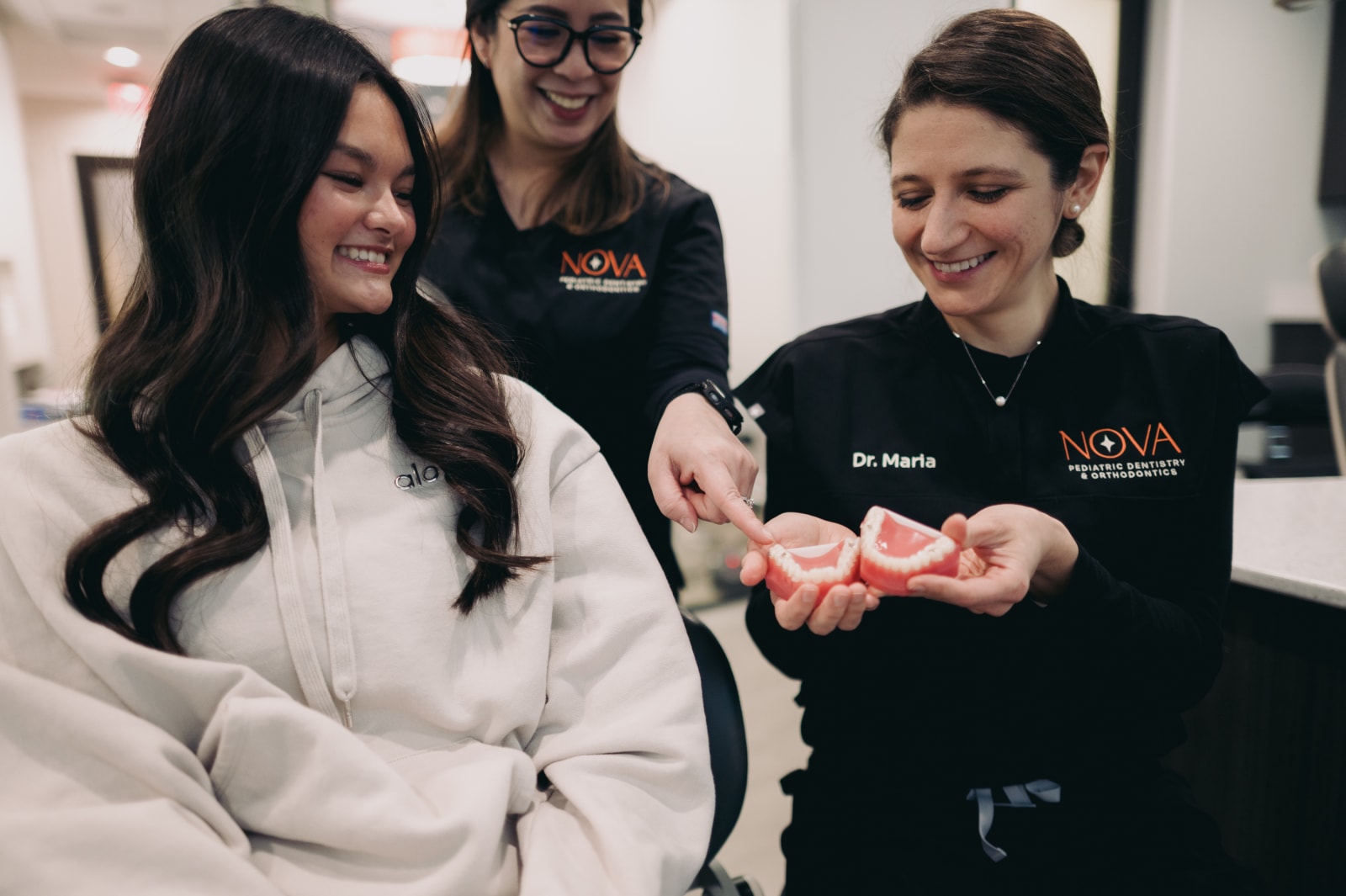
Behavior Guidance Alone
No medication, just a skilled team using pacing, distraction, and trust-building. It works well for mild nerves and routine care, with no added cost.
Nitrous Oxide
A small scented mask over the nose helps your child feel relaxed and a little floaty without putting them to sleep. Gentle, affordable, and gone from their system within minutes. Best for mild to moderate anxiety.
Oral Conscious Sedation
Your child drinks a small cup of liquid medication that makes them drowsy and relaxed. They're still breathing on their own, and most remember little or nothing afterward. One thing to know: once the medication is given, the level of sedation can't be easily adjusted.
IV Sedation
Medication goes through a small line in the arm, so the level of sedation can be fine-tuned throughout the visit. That flexibility makes it a strong choice for longer or more involved appointments, and it's available right here at Nova Pediatric Dentistry & Orthodontics in Ashburn.
Recovery, Aftercare, and What the Rest of the Day Looks Like
After Behavior Guidance or Nitrous Oxide
There's really nothing to recover from. If a tooth was numbed, watch for accidental lip or cheek chewing until the feeling comes back, usually within one to three hours. Soft foods in the meantime is all you need.
After Oral Conscious Sedation
Plan for a quiet day at home: no school, no sports, and no unsupervised bath or shower. Start with clear liquids, move to soft foods when they're steadier, and know that some nausea or crankiness for a few hours is completely normal.
After IV Sedation or General Anesthesia
Your child stays in a recovery area until they're breathing well and alert enough to go home safely. Expect some grogginess, possible nausea, and maybe a mild sore throat. Most kids are back to themselves by the next morning.
What Anxiety Support Costs and How Insurance Handles It
Cost questions are completely normal, and you deserve a straight answer before the appointment, not after. A few things shape the final number:
- Type of sedation. Nitrous oxide is the most affordable, just a small add-on. Oral sedation costs a bit more. IV sedation and general anesthesia are the most involved, requiring a dedicated anesthesia provider throughout.
- Length of the appointment. Sedation is typically billed by time, so more dental work means a longer visit and a higher cost.
- The dental treatment itself. Fillings, extractions, and other procedures are billed separately from the sedation.
- Ask for a written estimate upfront. Request one that separates the dental treatment from the sedation costs.
- Request a pre-authorization. This tells you what your insurance will actually cover before the day arrives.
- Check your medical insurance too. For anesthesia especially, medical insurance sometimes covers what dental insurance won't. It's worth asking.
Insurance coverage depends on your specific plan. Insurers are more likely to help when sedation is medically necessary, such as for a very young child, a child with special healthcare needs, or a visit involving significant dental work.
Preventing Dental Anxiety Long-Term: Building a Positive Relationship With Care
The best time to deal with dental fear is before it ever takes hold. A few simple habits go a long way:
- Start Early. We recommend a first visit around your child's first birthday or when their first tooth comes in. It's a short, gentle appointment, mostly counting teeth and answering your questions.
- Keep Visits Regular. Coming in every six months keeps the office feeling ordinary. When visits are spread far apart, each one can feel like starting from scratch for your child and for us.
- Prevent What You Can. Sealants (a thin protective coating on the back teeth) and fluoride treatments help stop cavities before they start. Pair those with good brushing habits at home and you're reducing the chances your child will ever need the kinds of treatments that make kids nervous.
- Catch Small Problems Early. A tiny cavity caught at a routine visit is a quick, simple fix. That same cavity left alone for a year becomes a much bigger deal and a much harder appointment for an anxious child to get through.
- Watch Your Words at Home. Try to keep dental talk neutral. Avoid using the dentist as a threat, sharing scary stories, or offering big rewards just for showing up.
- Keep the Momentum Going Into the Teen Years. This is when braces or aligners often enter the picture. A teenager who already feels comfortable at the dentist makes that transition so much more smoothly.
Ready to Make an Appointment? Here Is How NOVA PDO Can Help
The best thing you can do before that first visit is give us a call and tell us about your child. What worries them? What has helped in the past? What has made things worse? That conversation lets us plan the appointment around your child before they ever walk through the door, whether they are coming in for a dental visit with Dr. Woo or an orthodontic evaluation with Dr. Ullrich.
We are located at 21785 Filigree Court, Suite 208 in Ashburn. Our office is open Monday, Wednesday, and Friday from 7:30 am to 4:30 pm, and Tuesday and Thursday from 8:00 am to 5:30 pm. You can reach us at (703) 729-7005 or request an appointment online. And if you just have questions and are not ready to book yet, that is a great reason to call too.